You have a working ATM. It takes deposits. Dispenses cash. Prints receipts.
One morning the card reader jams. Your tech opens it up. Worn pickup roller. Easy fix — swap the roller, machine’s back online.
Except the roller was discontinued three years ago.
Not out of stock. Not backordered. Discontinued. The OEM stopped making it. Your distributor has nothing. Your maintenance provider wants to replace the entire card reader assembly.
The ATM still runs. But one small part is about to kill it.
Why OEMs Kill Parts
It’s not malice. It’s math.
Every part needs tooling. Molds for plastic. Dies for metal. Test fixtures for electronics. That tooling costs money to store, maintain, and calibrate.
When a new ATM model launches, the factory floor moves to new tooling. The old part — from a model that shipped its last unit five years ago — has maybe 500 buyers a year. The fixed cost of keeping the line open doesn’t shrink. Spread across fewer units, the per-unit cost climbs until it’s not worth running.
So the OEM sends an End-of-Life notice. Opens a last-time-buy window. Then the part is gone.
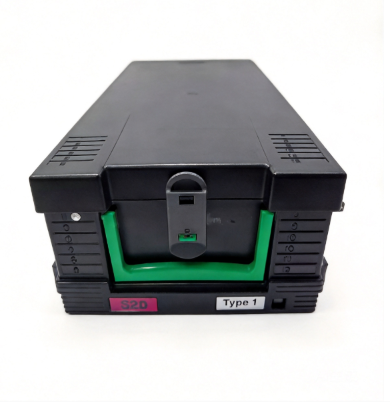
And here’s what most people miss: they often scrap the tooling afterward. The injection molds that made the cash cassette housing? Melted down. Test fixtures for the dispenser PCB? Torn apart. Engineering drawings? Archived on a server nobody checks.
The part can’t just be “restarted.” The physical stuff that made it no longer exists.
There’s another layer now too. Modern ATM parts have firmware. When a part is discontinued, the OEM may stop releasing firmware updates and calibration software. So even if you find a used replacement, you might not be able to make it talk to your network.
What This Does to Your Operation
The part itself is cheap. A roller. A sensor. A solenoid.
The downtime is not.
ATM not working means customers walking away. Competitor machines getting the transactions. SLA penalties if you’re a managed service provider.
For operators in remote areas, it’s worse. That machine might be the only cash point for miles. Tech has to travel a day to reach it. And if the part doesn’t exist, there’s no ETA at all.
Then the domino effect starts:
- One machine goes down. Part is discontinued.
- You pull the part from another machine as a stopgap.
- Now two machines are at risk — one cannibalized, one on borrowed time.
- When the borrowed part fails, both are dead.
- You either replace two machines or find someone who can actually deliver the part.
This happens. Every week, somewhere.
Which Parts Fail First
Some legacy parts fail on schedule. They wear out. The problem isn’t that they fail — it’s that they fail years after the OEM stopped making them.
Things that wear out:
- Pick rollers and feed rollers. Rubber degrades, loses grip. 2-5 year life depending on volume.
- Belts. Timing belts stretch. Drive belts crack. A snapped belt inside a dispenser can shred the whole unit.
- Solenoids and actuators. Mechanical cycling. They work fine until they don’t. Zero warning.
Things that age out:
- Electrolytic capacitors in power supplies. 7-10 year lifespan. Then they dry out and fail. A power supply failure can take out several subsystems at once.
- Sensors. Optical ones collect dust. Magnetic ones drift out of calibration. You get intermittent errors that take forever to diagnose.
- LCD backlights dim. Touch panels lose sensitivity in spots. Not catastrophic but your customers notice.
Things that wear from use:
- Cash cassette mechanisms. Push plates, guide rails, locks — millions of note-present cycles add up.
- Card reader transport paths. Every contact point wears. A worn transport can damage cards.
Your Options When a Part Goes EOL
Three paths. Two are common. One actually works.
Option 1: Search the Market
The default move. You search online. Email suppliers. Post on forums. Someone somewhere has a box of discontinued parts in a warehouse.
Problem: everyone with the same machine is doing the exact same thing. The global supply is finite and shrinking. You’re bidding against every other operator. Quality is a coin toss — you don’t know how that “new old stock” was stored. And when supply runs out, it runs out for everyone.
This is not a strategy. It’s hope.
Option 2: Replace the Machine
Pull the old ATM. Drop in a new one. Warranty, support, supply chain — sorted.
Problem: you’re replacing a machine that might have five more years in it, over one dead part. The original deployment ROI never materializes. And in many markets, the capital budget for fleet replacement just isn’t there. You run what you have.
Option 3: Remanufacture or Repair
Instead of hunting for a part that doesn’t exist, you make it.
Reverse-engineer the original. Create new tooling. Run a production batch. Or — for complex electronics — repair the failed sub-assembly and send the unit back.
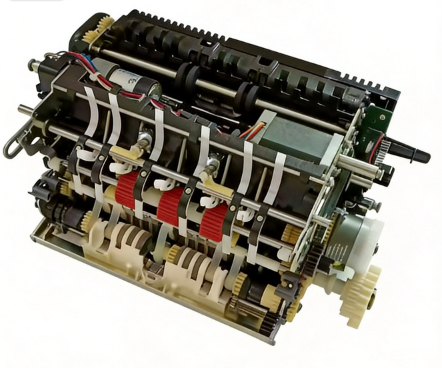
This takes real manufacturing. CNC machines. Injection molding. PCB lines. Test benches calibrated to each ATM platform. Engineers who actually understand NCR dispenser timing and Diebold transport geometry.
Very few ATM parts companies can do this. Most trade boxes. They buy, they sell, they don’t make. When global supply dries up, they have nothing for you.
How We Do Legacy Parts
We’re a manufacturer. When a part hits EOL, we don’t search harder. We ask: can we make it?
REBUILT Program
Discontinued parts, re-manufactured from scratch:
- Reverse-engineer the original — dimensions, materials, electronics, tolerances
- Create tooling — CNC’d molds, metal stamping dies, PCB layouts
- Produce — small-batch manufacturing in our South China facility, same QA as volume production
- Test — every unit on a matching ATM test bench before it ships
12-month warranty on all Rebuilt parts. They install the same. They run the same. They just come from our factory, not the OEM’s.
Repair Services
Card reader controller acting up? Dispenser mainboard dead? Power supply unit failed?
Send it to us. Our techs find the failed sub-assembly and replace just that — not the whole board. Unit gets bench-tested and shipped back, usually within a week.
Global Network (for What We Can’t Make)
Proprietary ASICs. Encrypted firmware modules. Some things can’t be manufactured by a third party.
For those, we maintain a global supply network. Factory relationships. Distributor connections. Decommissioning facility contacts. Inventory that never hits public marketplaces.
Get Ahead of EOL Before It Hits
Best time to deal with legacy parts? Before they fail.
Audit your fleet. List every ATM model. Check OEM end-of-life status and parts availability timeline for each. Models that went EOL more than three years ago are highest risk.
Flag the show-stoppers. Not every part needs a backup plan. Focus on what causes hard-down:
- Card reader transport mechanisms
- Dispenser drive assemblies
- Power supplies
- Main controller boards
- Operator panels and displays
Ask suppliers the right question. When you’re evaluating a parts supplier, ask one thing: “What do you do when a part is discontinued and no stock exists anywhere?”
If they say “we search our network” — they’re a trading company. If they say “we assess whether we can manufacture it” — they’re a partner. You want the second one.
Lock in a fleet program. A structured program with a supplier who knows your fleet means proactive stocking, predictable cost, and priority when things go wrong. Legacy parts go from crisis to routine.
Talk to Us
Your fleet includes aging models? Send us the list. We’ll tell you which parts are at risk, which we stock, and which we can make when the time comes.
No charge. No obligation. Just a clear picture of where you stand.
linda.zhou@microlinkpro.com
WhatsApp: +852-93572135
Include your ATM models and any parts you’re worried about. We respond within 12 hours.
MicroLinkpro Technician Team